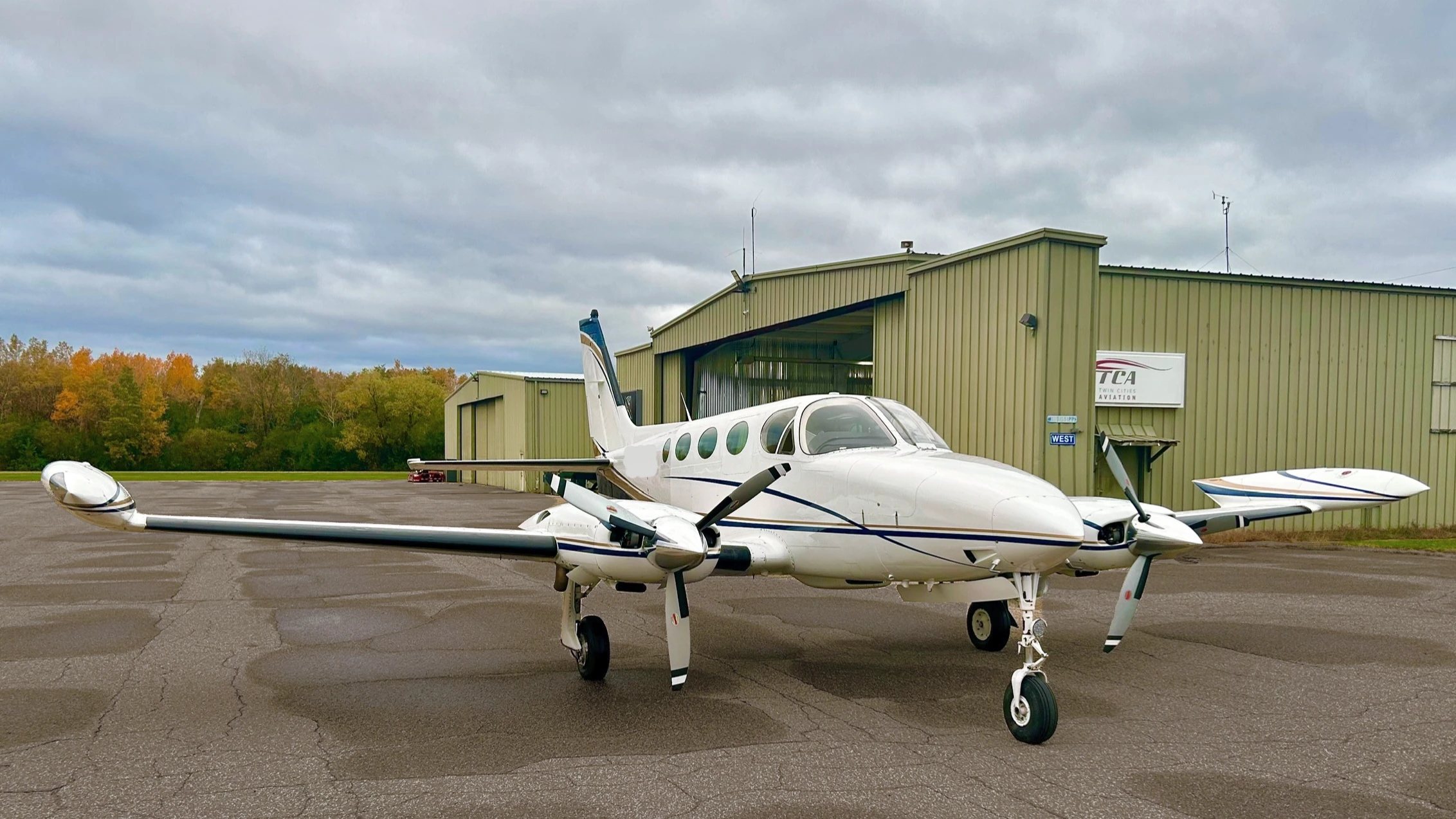
Cessna 310 / T310
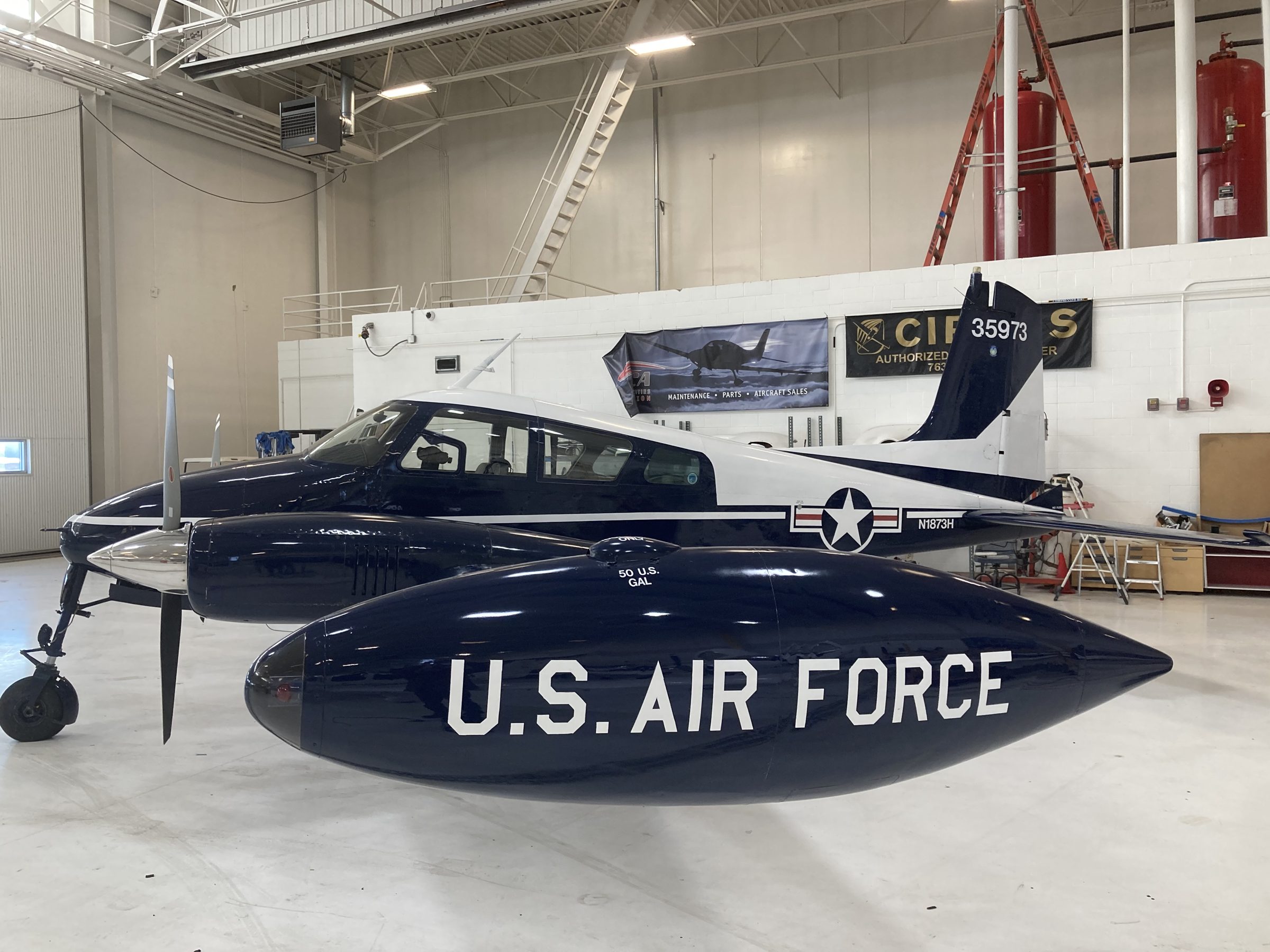
1954–1981Where the family starts: the classic tip-tank twin and a common step up to multi-engine. The 310A also served the U.S. Air Force as the U-3A.
- Engines
- Continental O-470, IO-470, IO-520 · T310: TSIO-520
- Cabin
- Unpressurized

Cabin-class & piston twins
Inspections, upgrades, avionics and pre-buys for every 300- and 400-series twin Cessna — from an FAA Part 145 repair station at Anoka County–Blaine Airport.
One family, many systems
Twin Cessnas share a lot of DNA, but the details change from one branch to the next: normally aspirated, turbocharged or geared engines; tip tanks or wet wings; electric or hydraulic gear; pressurized or not. Those details decide what your airplane needs at its next annual.
What we do
We work on all 300- and 400-series twin Cessnas, from 310s to 421s, for owner-pilots and Part 135 operators alike. Every job starts with a conversation about the airplane, its records and how you fly it — and we call you before anything grows.
The family guide
We maintain every model below. Production years, engines and cabins at a glance — tell us your model and serial number and we will talk through what applies.
Where the family starts: the classic tip-tank twin and a common step up to multi-engine. The 310A also served the U.S. Air Force as the U-3A.
A turbocharged 310 with a fourth cabin window, later replaced by the turbo 310.
A lighter, unpressurized 340 sibling. Only about 65 were built.
A pressurized six-seat cabin on the 414 wing, with the 310’s tail and gear. About 1,300 built and a favorite for RAM engine programs.
Cabin-class workhorses: the 401 set up for corporate travel, the 402 for commuter and freight work.
Longer wet wing without tip tanks and hydraulic gear. Still a cargo and commuter staple.
The big unpressurized twin: stretched cabin, Fowler flaps, trailing-link gear. 396 built.
The first 400-series Cessna and the root of the 401, 402 and 421. Rare today.
The 421’s pressurized fuselage on the lighter 402 wing. The 414A added a wet wing, longer nose and new gear.
The top of the owner-flown piston twin Cessna line. About 1,900 built; the 421C added a bonded wet wing and hydraulic gear.
The family’s outlier: high wing, twin booms, one engine pulling and one pushing. Different systems and different inspection items.
In the hangar
From a 310 wearing U.S. Air Force colors to a RAM-converted 340A, the airplanes on our floor are flown, loved and kept for the long haul.
Owner briefing
AD 2000-01-16 covers the turbocharged 300- and 400-series twins: repetitive inspections, tailpipe and engine-beam checks, pressure testing and periodic overhaul at an approved exhaust facility. A later AD (2023-09-09) addresses V-band couplings. The compliance table matters, and so do the records — we track both.
The 400 series has a structural history worth knowing: the 2005 spar-strap ADs, the 2018 carry-through spar cap AD after a cracked cap was found on a 402C, and a 2026 FAA proposal for new engine-beam inspections and a life limit on the 402C and 414A. A records review shows where your airplane stands.
SIDs are not automatically mandatory for Part 91 owners, but some SID items have become mandatory through ADs, and many Part 135 operators must comply through their maintenance programs. We maintain twins for Part 135 operators and can review which SID items apply to your serial number.
A 340 was built for 3.8 psi, a 340A and 414 for 4.2, a 414A for 5.0. Owners often live with less than the airplane was designed for. Door seals, drain seals, heater ducts and outflow valves are where the leaks hide.
The 421, 404 and 411 use geared GTSIO-520s. They reward careful power and temperature management, and any prop strike or hydraulic lock calls for the inspection the FAA highlighted after a 421 propeller-shaft failure.
Electro-mechanical gear on the 340 and on earlier 402s and 421s; hydraulic on the 402C, 414A, 421C and 404. AOPA calls the gear the 310’s weak point. Rigging to the service manual — not just lubing and checking tension — keeps a twin’s gear healthy.
AD 2016-17-08 replaced elevator trim tab hardware across the 300 and 400 series and added repetitive inspections. The FAA has also flagged flap-cable tension and condition. Small parts, big consequences.
Factory known-ice packages differ from the more common “full de-ice” installations, and AD 2014-03-03 added icing limitations or placards to many twins. Before a Minnesota winter, boots, prop heat, pumps and timers deserve a close look — and we replace de-ice boots in-house.
Upgrades
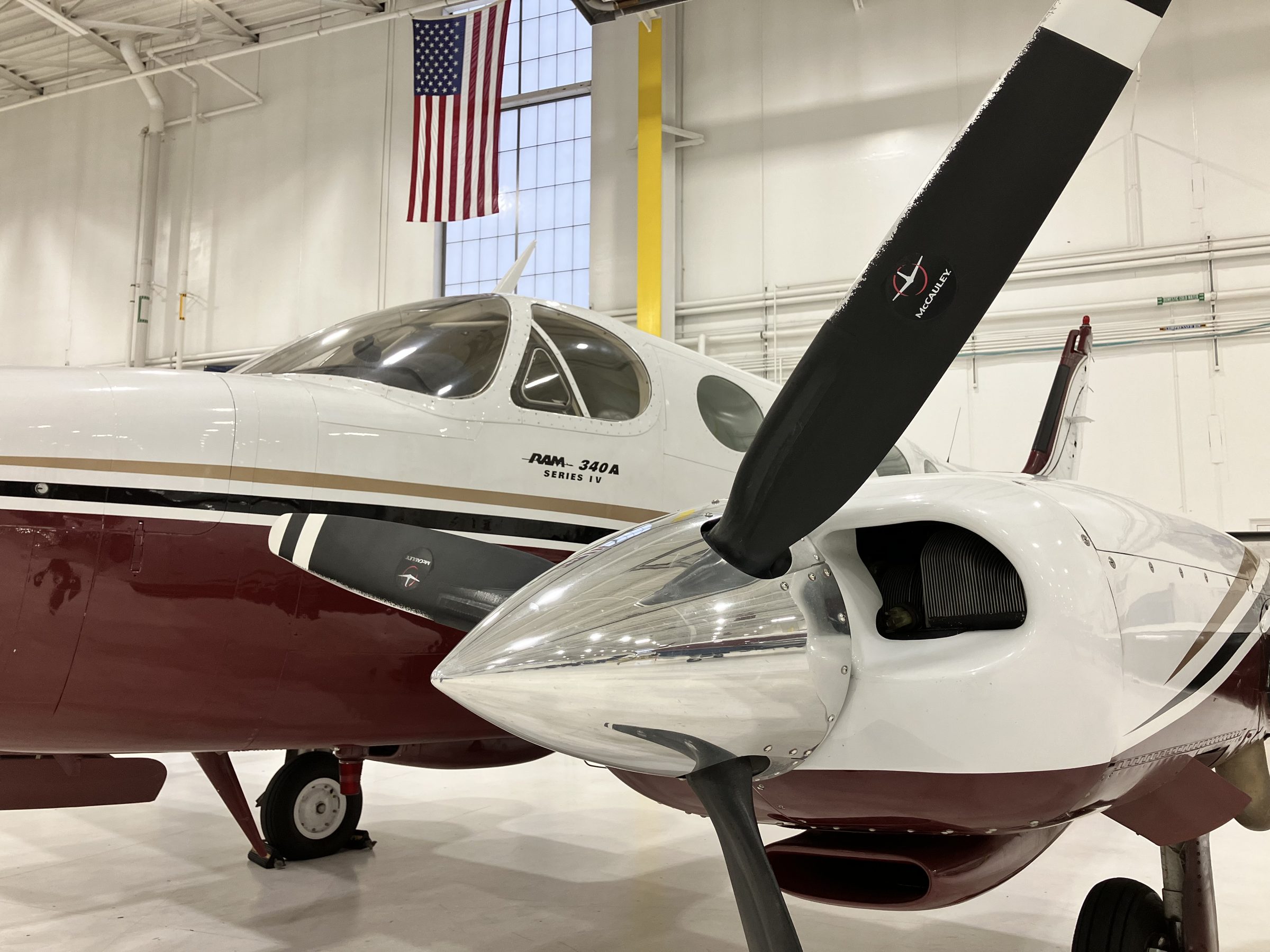
We maintain RAM-converted twins and install RAM STCs. RAM Series IV, VI and VII programs raise horsepower and gross weight — a Series IV 340A runs 325 hp and a 6,290 lb gross weight.
Avionics mods including the Garmin GI 275 electronic flight instrument and the GFC 600 digital autopilot, approved for the 340/340A, 414A, 421C and 310R.
Upgraded twin engine monitors that show every cylinder on both engines — and make troubleshooting faster.
STC intercooler installations for turbocharged twins.
Speed brake STC installations for steeper descents without shock-cooling the engines.
Griggs wing locker fuel STC installations for more range.
Pneumatic de-ice boot replacement, in-house.
Every mod brings STC paperwork and a new weight and balance. We weigh aircraft on our own scales — important for Part 135 operators.
Buying or selling a twin?
Spar and exhaust AD history, pressurization history, gear history, corrosion and engine logs — the things that separate a good twin from an expensive one. We list aircraft we know, too.
Model data is drawn from FAA type certificate data, Federal Register airworthiness directives and published type guides. Production figures are approximate. Applicability of ADs, service bulletins and SIDs depends on model and serial number — always check the current documents for your airplane.